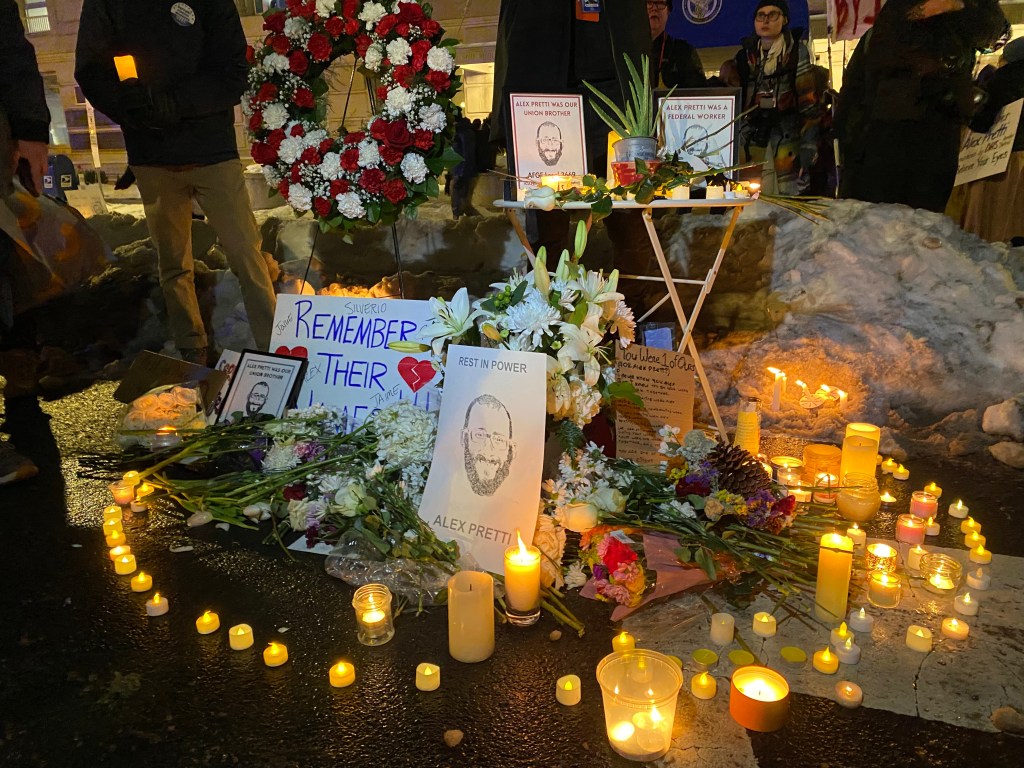
Abolishing ICE is like clearing ice and snow, one vigil attendee told me.
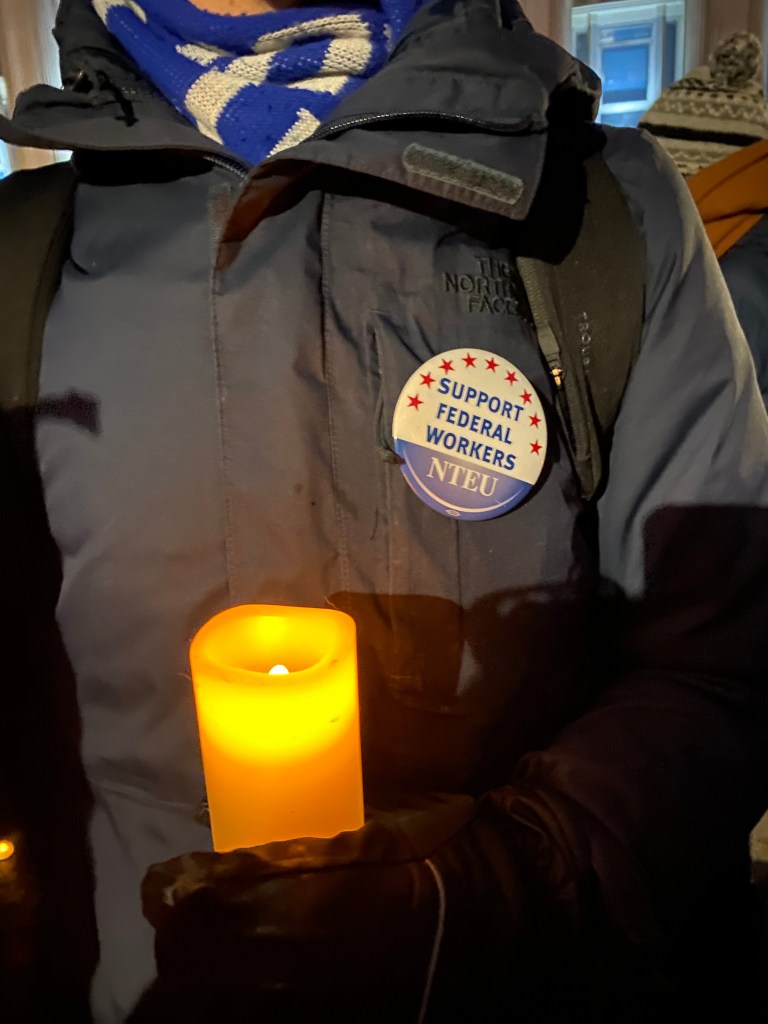
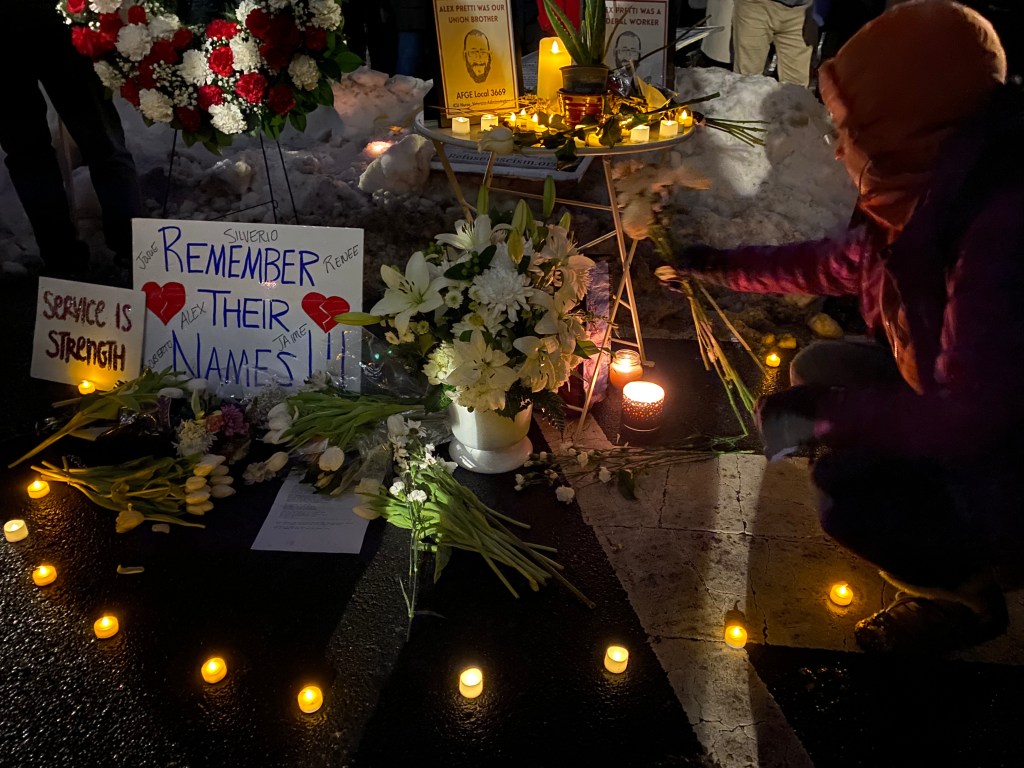
On Wednesday, I reported from a vigil for Alex Pretti, the intensive care nurse for veterans who was murdered in Minneapolis by federal agents one week ago. The vigil happened in front of the Veterans Affairs headquarters.
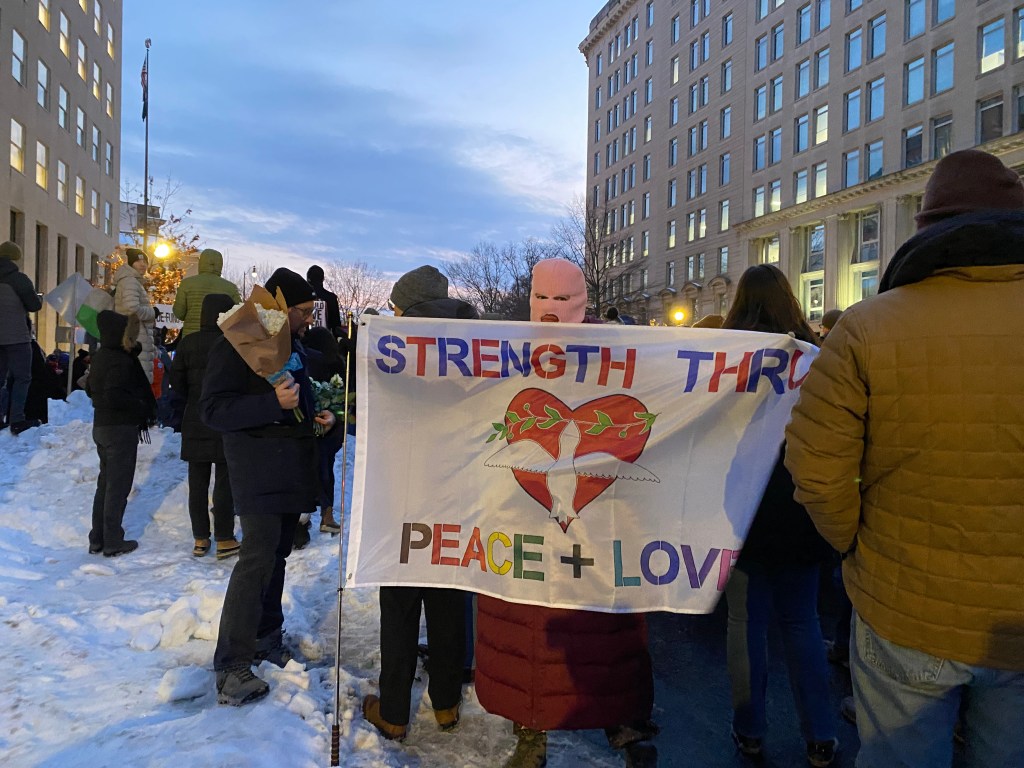
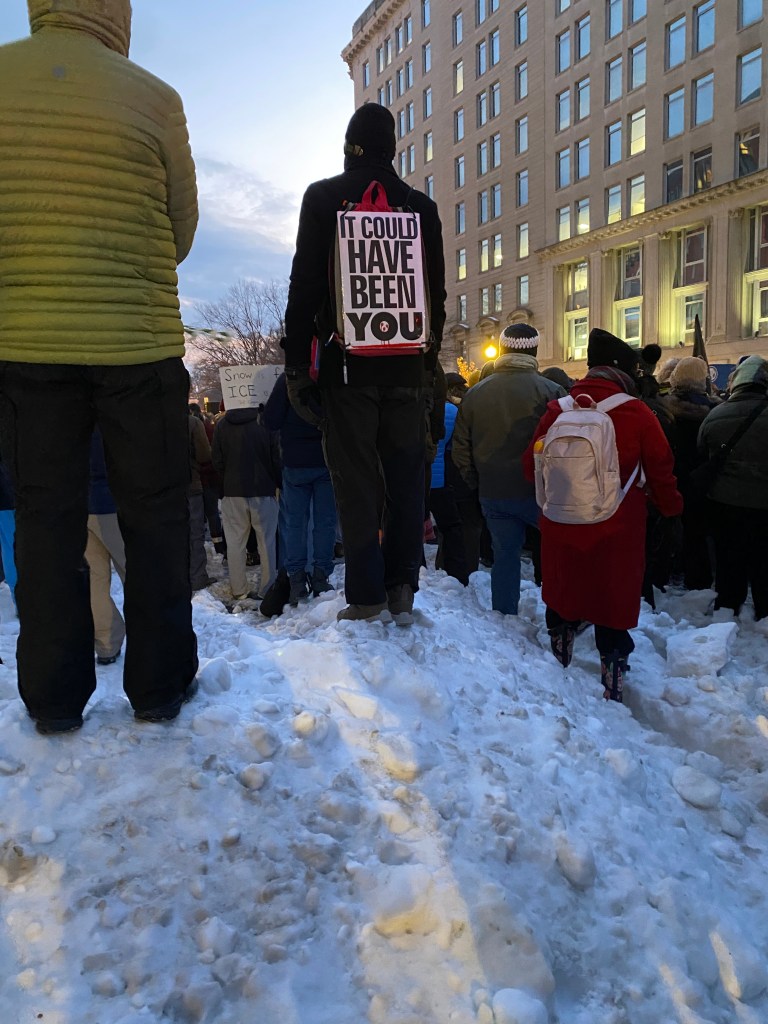
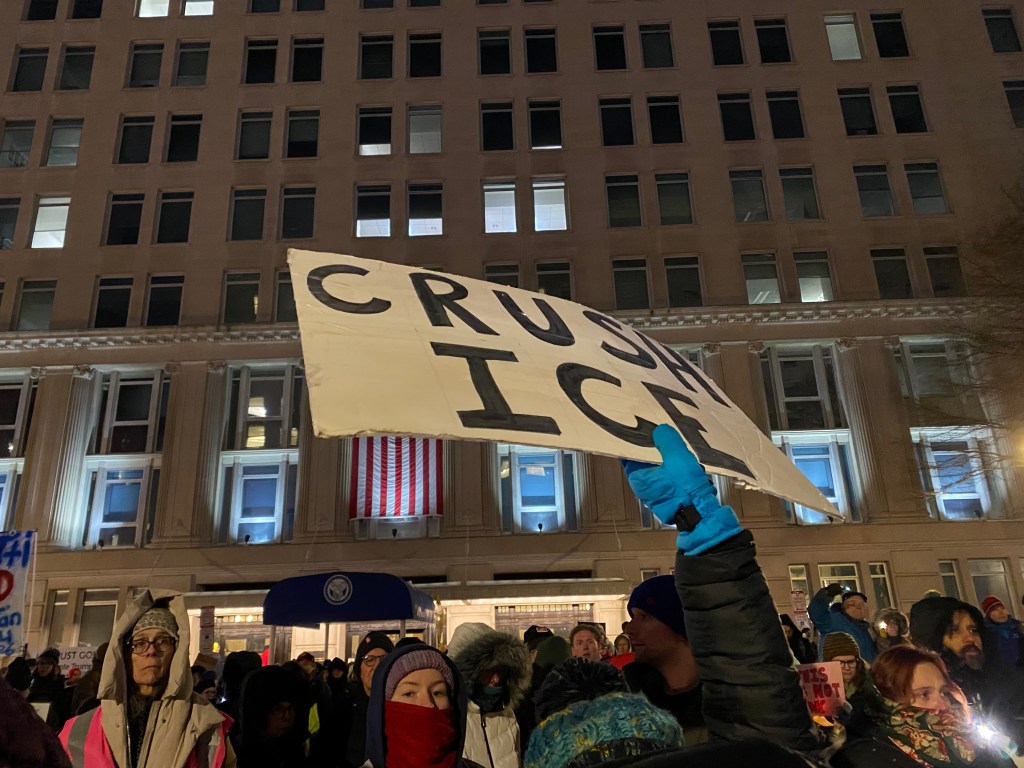
There was a cold weather advisory — DC is in the grips of its most extreme cold weather in at least 150 years — and everyone slogged through snow and climbed atop ice to get to the vigil. But about a thousand people showed up, their breaths frosting in the night air as they shouted and sang and sobbed.
I interviewed several attendees and speakers for the Guardian US. This part will stay in my memory for a long time:
The Rev Chris Antal, a Unitarian Universalist minister who served as a VA chaplain, led the crowd in a moment of silence on Wednesday, followed by three long mournful keens of a whistle, which has become the nationwide sound of warning about the presence of federal agents. Then the crowd burst into a death wail, the primal keening echoing across the concrete facade of the VA buildings.
–Nurses remember Alex Pretti and vow to ‘bring the care our patients need,’ Guardian US
The cries were full of sorrow and anger and determination. I wonder if they were heard at the White House a block away.
I asked Elizabeth Coughlin, a grad student at George Washington University, why she was there. She talked about the need to abolish ICE and curtail funding to the Department of Homeland Security, especially on the 250th anniversary of America.
But she also talked about how isolated she’d felt, watching everything unfolding in Minnesota while everyone here was sheltering from the cold and the winter storm. Joining the vigil was a way to seek and express community.
And Coughlin talked about ice. Specifically, about laws requiring you to remove snow and ice from sidewalks and from cars before driving: “When you are shoveling the sidewalks, if you’re not shoveling or clearing it enough to be accessible for someone in a walker or wheelchair, then you’re not done yet. Go back and shovel.”
These are the actions we take to keep ourselves and the entire community safe, and the work needs to keep moving forward, she said.

 Not a Doctor
Leave a comment