And what about hamburgers, cheese, and eggs during this bird flu outbreak?
Welcome to Not a Doctor. I’m Melody Schreiber, a journalist and the editor of What We Didn’t Expect: Personal Stories About Premature Birth.
There’s a lot of disquieting, rage-inducing, and just plain bad news out there right now, and unfortunately, the infectious disease beat isn’t any better. But in this newsletter, I try to focus on the practical and logistical aspects of health and science — what you can do to protect yourselves and your community. I hope it helps.
We’ll start with a Kat, but read to the end for a very good Cat!
Is it safe to drink pasteurized milk?
Today, friend of the newsletter Kat S. asks:
Is there still a risk for pasteurized milk with H5N1? I feel like I saw some conflicting analysis early on.
Great question! The quick answer is nope. There doesn’t seem to be any risk to drinking pasteurized milk.
There was some worry a few months ago when research showed there are inactivated viral particles of H5N1 in the milk you can buy at the store.
But follow-up research showed that all of those viral particles are duds. They’re the old broken-up chunks of virus that were inactivated by pasteurization — which is basically boiling milk at certain temperatures for certain amounts of time. The withered husks of viruses remain, but they can’t grow or hurt anyone.
The great news here is that pasteurization works!
And pasteurization doesn’t just kill off bird flu. It also kills E. coli, salmonella, campylobacter, listeria, and parasites found in unpasteurized milk.
These pathogens are very dangerous, especially for people who are pregnant, immune-compromised, young, and older — but even among people without risk factors, these infections are super nasty.
“If there’s anything to avoid because of foodborne illness, it’s definitely raw milk,” Kali Kniel, professor of microbial food safety at the University of Delaware, told me.
One cell of Shiga toxin-producing E. coli can kill a person, and 100 cells of salmonella can make someone sick for the rest of their life.
Pasteurizing milk is one of the greatest public health success stories. It’s super easy to do and it saves lives.
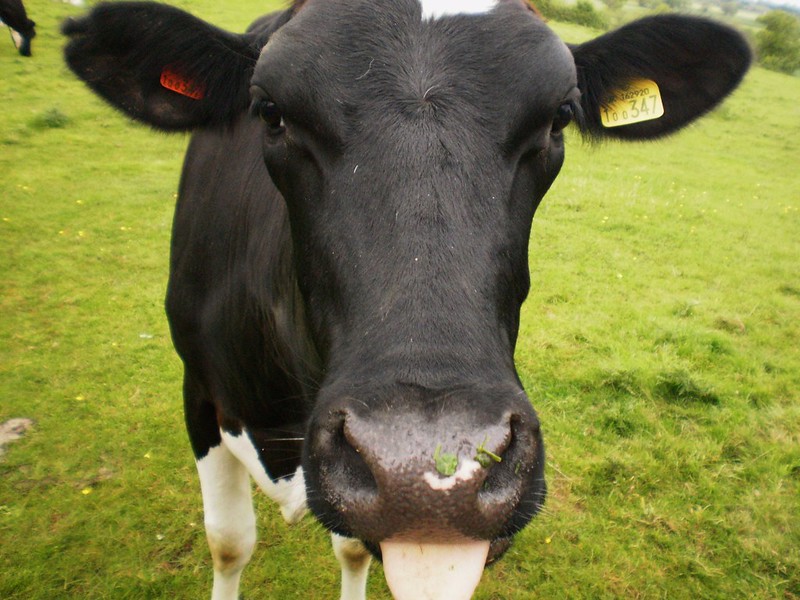
Cheese made from pasteurized milk is also safe.
It’s not clear yet if cheese made from raw milk is okay; when scientists first tried to study it, they didn’t find any virus at all in the cheese, which means none of the cows were sick when that cheese was made. They’ll keep studying it, but the current thinking is that the aging process might kills off the virus.
What about raw milk?
Raw milk is a much, much worse idea.
When cows are infected with H5N1, enormous quantities of the highly pathogenic virus pass into their unpasteurized milk.
When mammals like mice drink the tainted milk, they get very sick. It causes blindness and death in cats.
There haven’t been any cases of humans reporting bird flu infections from raw milk (yet?), but based on how it sickens and kills other mammals, I would absolutely not recommend it. Not now, and not ever, given the other awful pathogens present in raw milk.
Because not many people drink raw milk now, cases of milk-borne illness are relatively low. Strong regulations have made the milk supply significantly safer. But states where it’s legal to buy raw milk had 3.2 times more outbreaks of illness because of unpasteurized milk.
What about the benefits of raw milk? That answer is a lot shorter: There are none.
Pasteurization may slightly affect levels of nutrients like vitamin C, “but milk’s not really a good source of vitamin C anyway,” Benjamin Chapman, department head and professor of agricultural and human sciences at North Carolina State University, told me.
“You’re not losing anything by pasteurizing,” said Celine Gounder, infectious disease specialist and epidemiologist at NYU and Bellevue Hospital and editor at large for public health at KFF Health News. “The nutritional value isn’t changed by heating the milk.”
Raw milk drinkers don’t just make themselves sick. By potentially infecting themselves with avian influenza, they risk endangering others as well by offering the virus opportunities to mutate and spread, as I reported for The New Republic.
Enjoying this free post? Subscribe now!
What about meat and eggs?
Let’s talk poultry first.
In theory, no poultry products from H5N1-infected flocks should make it into the food supply.
That’s because bird flu is really deadly in birds. When poultry—domesticated chickens, ducks, turkeys, and so on—get sick with H5N1, they start dying pretty quickly. When infections are confirmed, workers kill off the entire flock, sometimes millions of birds, so it doesn’t spread and completely take out all poultry.
Any birds or eggs from affected farms are discarded.
If, by some chance, infected poultry products did make it into the food supply, there are still safeguards in place, like pasteurizing eggs.
Also, this is why we cook chicken and turkey completely. Like raw milk, poultry meat can be covered with some really bad bugs, but cooking kills them off. If I ate eggs, I would probably cook them fully right now as well, just to be on the safe side.
Now on to beef and pork.
As I wrote about beef safety for The Guardian:
In another study, scientists pumped ground beef full of an imitation virus and then cooked the meat. Weighing in at 300 grams, the hamburgers were thicker than what consumers might find in a fast-food restaurant, making them “very thick to make it the worst-case scenario,” said José Emilio Esteban, USDA’s under-secretary for food safety.
But cooking them fully did inactivate the virus, he said.
At medium (145F/63C) and well-done (160F/71C), the virus was not detected. Those internal temperatures have long been recommended by the USDA’s Food Safety and Inspection Service.
“If you cook it under those conditions, it should be very safe to eat,” Esteban said.
At 120F/49C, or rare, the imitation virus was “substantially inactivated” in burgers with high levels of virus added, the USDA report says.
It’s especially important to cook burgers fully, because a big portion of our ground beef comes from dairy cows.
So far, there’s only been one detection of H5N1 in a pig, which lived in a backyard farm and did not enter the food supply. But pigs are notoriously susceptible to influenza, so it’s very possible some herds have gotten bird flu.
Either way, you should always cook pork fully. Please.
Should I make any changes to my diet?
I’m concerned enough by the detection of trace amounts of virus when ground beef was rare that I’m not eating rare meat for a little while, and I’m also avoiding raw cheese.
One gift I got myself this year: a meat thermometer. Only about 1 in 4 Americans use a thermometer to make sure meat is cooked thoroughly, and I just became one!
But to be honest, I don’t eat a ton of beef, and as I’ve learned more about the dairy industry this year, I’ve also substantially cut down on animal milk and cheeses. Milk substitutes do the trick just fine in a lot of circumstances.
On a bigger scale, if we want to reduce outbreaks like these, we have to consider significant changes to what we’re eating, as I reported for The New Republic.
That can start with being more conscientious about what you’re eating — replacing ground beef with a meat alternate or trying out delicious coconut-milk ice cream. It doesn’t have to be all or nothing, but it is actually pretty easy to make decisions that help the health of the planet, animals, and yourself.
SPEAKING OF ANIMALS!!!!
Please welcome Lady! She is seven months old, and she is the sweetest, cuddliest, most playful cat ever. Rescuing her was the balm we needed this week (and for coming months and years).

If you found this newsletter helpful, please subscribe and share with friends! If you ever have questions, leave a comment below or respond to this email. Stay safe out there, friends!

 Not a Doctor
Leave a comment