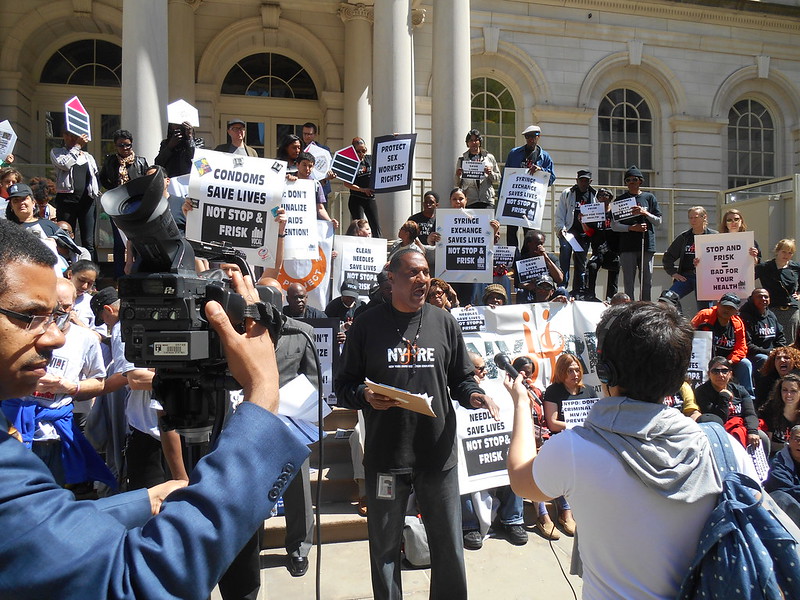
If you’re looking for ways to take action, try getting involved with local and state public health.
I wrote for The New Republic today about what Donald Trump’s victory means for public health. There’s a lot to unpack about what will likely happen, but I wanted to highlight what we can do about it.
In order to save public health, we need to understand the countless and almost entirely invisible ways it saves our lives every day.
“Go to city council meetings, support pro–public health candidates, write op-eds, counterprotest if necessary,” said Gregg Gonsalves, associate professor of epidemiology at Yale School of Public Health. To fight against tyranny, “you get ready to defend institutions.”
That means finding out who runs public health in your city or town, finding out what they need, and supporting them. “If there’s a city council meeting and they’re talking about your local health department budget, make sure you’re there to advocate for it,” he said.
And he’s not just talking to residents of red states or scrappy little towns, which may already face significant challenges. Larger departments and blue districts that expanded their work with Covid funding have had to cut back, but they may be motivated to find ways to continue these efforts if residents indicate they’re important.
“This is all hands on deck,” Gonsalves said. “You need to show up everywhere … everything is in jeopardy.”
Anti-science proponents have gotten very good at showing up, consistently, at all levels of leadership and making their voices heard in public meetings and private communication. Those eager to defend public health institutions may need to start following a similar playbook.
Anti-science advocates haven’t just showed up to city council and school board meetings. They have harassed and threatened officials—and this election may further embolden angry individuals who believe they have the weight of the federal government behind them. That makes support for embattled local officials and decisionmakers all the more important.
Public health now has “a lot of super critics,” said Lindsay Wiley, professor and director of the Health Law and Policy Program at UCLA Law. Why not become a superfan?
With all of this news, it’s easy to feel helpless — and, indeed, that’s what proponents are counting on.
I’ve heard from friends who are canceling their media subscriptions and tuning out on politics. I get it. By all means, do absolutely everything you need to keep yourself safe and healthy; doomscrolling ain’t it.
But I hope, when you are in a safe place again, that you’re able to show up, in whatever way you’re able, to support what you value. And you can do it in ways that aren’t angry or critical, if that speaks to you.
I really appreciated these suggestions from Gonsalves and Wiley because I never thought about writing a nice note to my local health department to thank them for their work; it didn’t occur to me to show up at the next county meeting when they’re discussing the budget.
You don’t just have to be reactive to bad news; you can be proactive and support what matters to you in order to keep it.
Photo: VOCAL-NY
 Not a Doctor
Leave a comment